Key Takeaways
- Hydroseeding helps establish durable groundcover and reduce erosion.
- Custom seed blends are selected based on site conditions and project goals.
- Proper preparation, irrigation, and maintenance improve long-term results.
- A site evaluation helps determine the best groundcover solution.
Property owners dealing with bare soil, dusty lots, weak lawns, damaged hillsides, or newly graded land need a groundcover plan that fits the site’s actual conditions. hydroseeding groundcovers Southern California services from Quality Hydroseeding & Restoration provide a practical way to apply custom seed blends, mulch, fertilizer, water, and soil-binding materials across large or difficult areas. Quality Hydroseeding & Restoration helps residential, commercial, and public-property clients establish lawns, native plant coverage, wildflowers, and erosion-control groundcovers throughout Southern California. The goal is not simply to spray seed onto dirt. A successful project considers soil condition, slope, drainage, sun exposure, irrigation access, season, site preparation, and the intended use of the property.
Why Bare Soil Creates Bigger Property Problems
Exposed soil can quickly become more than an appearance issue. On a flat lot, loose material may become dust that drifts across walkways, neighboring properties, and construction areas. On a slope, rain can create rills, channels, and muddy runoff that carry away valuable topsoil before vegetation has a chance to establish. Quality Hydroseeding & Restoration approaches these connected concerns through groundcover establishment. Properly selected and maintained vegetative cover can improve the appearance of a site while helping to reduce the amount of soil left directly exposed to wind and rainfall. This is especially useful after grading, construction, drought damage, fire-related disturbance, or repeated lawn failure.
How Quality Hydroseeding & Restoration Addresses Difficult Groundcover Areas
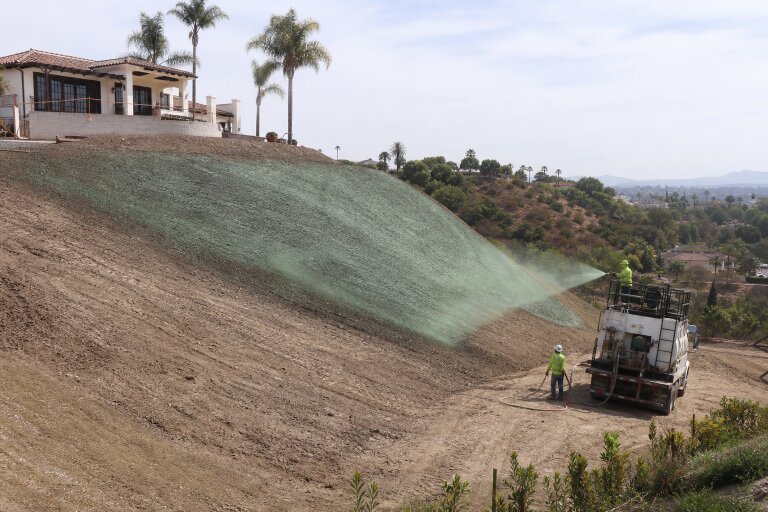
Hydroseeding is a hydraulic application process. Seed is mixed with water and site-appropriate materials, then distributed over prepared soil through a spray system. The resulting slurry is designed to provide broad coverage and form an early protective layer as seeds begin to germinate. Quality Hydroseeding & Restoration treats hydroseeding as part of a complete site plan. The process generally includes:
- Site evaluation: Reviewing the slope, existing soil, drainage patterns, access, sun exposure, irrigation options, and landscape objective.
- Custom seed selection: Choosing lawn seed, native plants, flowers, erosion-control species, or a blended groundcover mix based on the property’s needs.
- Material preparation: Combining seed with wood-fiber mulch, fertilizer, water, and, when appropriate, tackifiers or soil-binding materials.
- Hydraulic application: Applying the mixture over the prepared area for consistent coverage, including broad open areas and many slopes.
- Establishment guidance: Providing direction on watering, early monitoring, mowing where appropriate, and addressing weak or uneven areas.
For a useful technical overview, Caltrans hydroseeding guidance describes hydroseeding as the application of seed, fiber, tackifier, fertilizer, and related materials by hydraulic spray. It notes benefits such as moisture conservation, protection from raindrop impact, and longer-term erosion control as vegetation develops.
Groundcover Services for Common Southern California Property Needs
Quality Hydroseeding & Restoration can tailor its services to the property’s purpose rather than relying on a single generic blend. Common applications include:
- Residential hydroseeding: For homeowners who want to establish or restore a lawn, improve a bare backyard, or cover open landscape areas.
- Commercial and public-site hydroseeding: For larger properties where hand planting or traditional dry seeding may be impractical.
- Hillside and slope groundcover: For areas where exposed soil, runoff, and erosion are concerns.
- Native plant and wildflower mixes: For properties seeking a more natural planting approach or site-specific vegetation goals.
- New-construction seeding: For graded land and disturbed areas left bare after development work.
- Dust-control hydroseeding: For exposed soil on construction sites, vacant lots, and damaged landscapes.
- Post-fire and restoration work: For land that needs a thoughtful revegetation approach after severe disturbance.
Why a Custom Seed Blend Matters
Southern California properties can vary significantly, even within the same neighborhood. One site may receive intense afternoon sun and have compacted soil, while another may be shaded, sandy, steep, or difficult to irrigate. Quality Hydroseeding & Restoration can select a seed-and-mulch approach based on conditions that affect establishment.
Factors to Review Before Hydroseeding
- Whether the area receives full sun, partial shade, or mixed exposure.
- Whether the property is flat, moderately sloped, or steeply graded.
- Whether the goal is a maintained lawn, native cover, flowers, or erosion-control vegetation.
- How compacted the soil is and whether drainage problems are present.
- Whether the area will receive foot traffic, mowing, or limited maintenance.
- Whether reliable irrigation is available during the germination period.
Hydroseeding is not a substitute for correcting serious soil or drainage problems. Compacted soil, poor drainage, unstable slopes, and severe runoff may require additional work such as roughening the soil surface, adding topsoil, improving drainage, or installing erosion-control blankets or netting.
Can Hydroseeding Help With Hillside Erosion?
Yes, hydroseeding can be an important part of a hillside groundcover strategy when the site is properly evaluated. The mulch layer can help protect the surface during early establishment, and the developing vegetation can provide longer-term support as roots grow. Quality Hydroseeding & Restoration can help property owners determine whether a hillside is suitable for hydroseeding alone or needs added stabilization measures. Steep or unstable slopes require realistic expectations. Caltrans identifies hydroseeding as the most suitable for cut-and-fill slopes at 2:1 or flatter, noting that more difficult sites may require complementary treatments. For this reason, a site visit is particularly valuable when a slope already shows rilling, gullies, loose soil, or evidence of recurring runoff.
Hydroseeding After Fire or Severe Disturbance
After a wildfire or major soil disturbance, land can be especially vulnerable because protective vegetation and ground litter may be gone. Hydromulch and revegetation treatments can reduce bare ground, but they are not guarantees against intense rainfall or future erosion events. U.S. Forest Service post-fire rehabilitation resources describe how aerial hydromulch can reduce bare ground and appear to reduce hillslope erosion during lower- and moderate-intensity storms. However, heavy downpours still test the treatment’s limits. This reinforces the value of matching the restoration method to rainfall risk, slope conditions, drainage, and the site’s overall stability.
Hydroseeding Compared With Other Groundcover Options
- Hydroseeding: Often a strong fit for broad areas, slopes, lawns, restoration sites, and custom native or flower mixes. It requires preparation, irrigation, and patience during establishment.
- Sod: Useful when an immediately finished lawn surface is the priority. It can require more material handling, labor, and access for delivery and installation.
- Hand-planted flats or plugs: Appropriate for small, highly detailed ornamental planting areas, but labor demands can increase substantially across large spaces.
- Dry seeding: Can work on smaller, accessible sites with suitable soil, though it does not provide the same sprayed mulch coverage during early germination.
When to Request a Consultation From Quality Hydroseeding & Restoration
It is best to request a consultation before selecting seed, completing final grading, or beginning repeated attempts to establish a lawn. Early planning allows Quality Hydroseeding & Restoration to identify limitations that could affect results and recommend the right blend or additional erosion-control measures. A consultation is especially useful when a property has visible soil loss, persistent dust, a failed lawn, a newly graded slope, fire-related vegetation damage, large open areas, or a need for native plants and wildflowers. Property owners can also ask about seed tags, maintenance expectations, watering requirements, and any erosion-control documentation relevant to the project.
Frequently Asked Questions
Is hydroseeding suitable for every property?
No. Hydroseeding can be highly effective, but severely compacted soil, poor drainage, unstable ground, and very steep slopes may require additional preparation or stabilization.
How long does hydroseeded groundcover take to establish?
Timing depends on the seed blend, weather, soil temperature, irrigation, and maintenance. Consistent watering during germination is essential for successful establishment.
Can Quality Hydroseeding & Restoration install native plants and flowers?
Yes. Custom blends can be developed for lawn areas, native groundcovers, wildflowers, restoration objectives, and erosion-control needs.
Choose a Groundcover Plan Built for the Site
Quality Hydroseeding & Restoration offers Southern California property owners a practical starting point for bare soil, dusty land, weak lawns, disturbed construction areas, and hillside erosion concerns. The strongest results come from a complete plan that combines suitable seed, proper site preparation, hydraulic application, irrigation, and follow-up care. Requesting a site-specific consultation can help determine the right path toward reliable groundcover and better-protected soil.
Conclusion
Successful groundcover starts with understanding the site rather than choosing a one-size-fits-all solution. By evaluating soil conditions, slope, drainage, irrigation, and the property’s long-term goals, landowners can improve the chances of establishing healthy, lasting vegetation. Quality Hydroseeding & Restoration provides customized hydroseeding and restoration services to address erosion, dust, and bare soil challenges across Southern California. With proper planning, high-quality materials, and ongoing maintenance, hydroseeding can create stronger ground cover that enhances appearance, supports soil stability, and protects properties for years to come.