Key Takeaways
- Air casters provide superior maneuverability and reduce floor damage.
- They enhance safety by minimizing physical strain on operators.
- Various industries, including aerospace and manufacturing, benefit from air caster technology.
- Integration with modern manufacturing systems increases operational flexibility.
Table of Contents
- Introduction
- What Are Air Casters?
- Key Benefits of Air Casters
- Applications in Various Industries
- Enhancing Safety and Ergonomics
- Protecting Factory Floors
- Integration with Modern Manufacturing
- Future Trends in Air Caster Technology
Air casters are rapidly changing the way industries move heavy loads, introducing a near-frictionless solution for handling cumbersome equipment and materials. By providing effortless motion and superior weight distribution, these devices help facilities optimize processes and reduce workplace injuries. Integrating advanced shock absorbing casters into material handling systems allows organizations to maximize operational flexibility and protect valuable infrastructure.
As businesses strive to increase productivity while maintaining a strong focus on safety, air casters play a pivotal role in modern manufacturing and logistics. Their unique design helps preserve floor surfaces and promotes a safer, more ergonomic work environment for employees. For industries such as aerospace, energy, and advanced manufacturing, the advantages of air casters are becoming increasingly crucial to operational success.
With the ability to facilitate quick workspace reconfigurations and resource reallocations, air casters support the growing demand for flexible, data-driven manufacturing strategies. Their influence spans multiple sectors, enabling precise load movement and reducing direct labor and maintenance costs associated with traditional material-handling equipment.
This article explores the key benefits of air casters, their diverse industry applications, and the technological innovations shaping their future. From enhancing worker safety to extending the lifespan of facilities, air casters are setting new standards for industrial efficiency and adaptability.
What Are Air Casters?
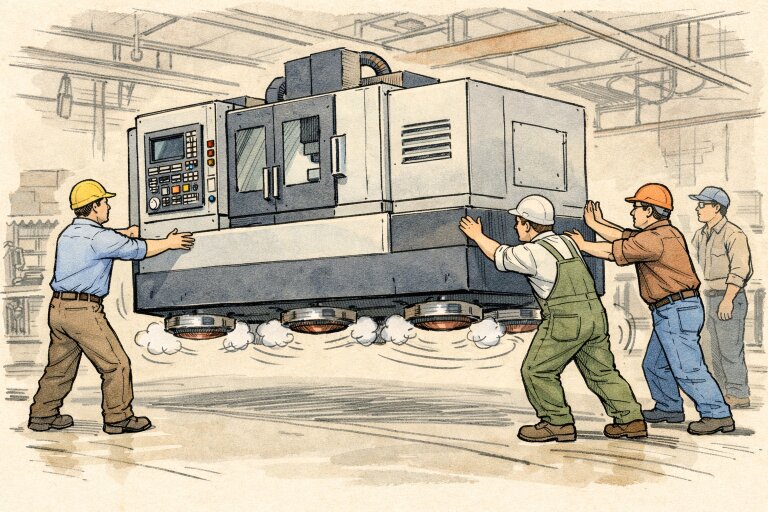
Air casters are advanced pneumatic devices designed to lift and transport heavy machinery or equipment by creating a thin cushion of air between the load and the flooring. When compressed air is supplied, it inflates a flexible diaphragm, forming a nearly frictionless film that lets heavy objects hover just above the ground. This technology allows for gentle, omnidirectional movement across smooth, non-porous surfaces, making it ideal for environments sensitive to vibration, dust, or impact damage.
Key Benefits of Air Casters
- Unmatched Maneuverability: Air casters provide 360-degree load rotation, simplifying navigation through tight corners and complex factory layouts.
- Minimal Floor Damage: The even pressure distribution significantly reduces the risk of leaving grooves, cracks, or other costly floor damage compared to traditional wheels or rollers.
- Operator Safety: Air casters reduce manual effort, reducing the potential for musculoskeletal injuries and enhancing overall workplace safety.
- Cost Optimization: With less need for frequent repair of both equipment and flooring, businesses benefit from lower lifecycle costs and reduced downtime.
Applications in Various Industries
Air casters have found widespread use across a range of sectors, revolutionizing how delicate or bulky goods are maneuvered:
- Aerospace: Precision is paramount in aerospace facilities, where air casters enable the safe, effortless relocation of sensitive assemblies and testing fixtures in cleanrooms and hangars.
- Manufacturing: On busy production lines, air casters facilitate rapid tool and workstation changes, reducing bottlenecks and supporting lean manufacturing workflows.
- Energy and Utilities: Handling massive components such as turbines or transformers benefits from the gentle, controlled movement enabled by air casters, which also support safety protocols in confined or high-risk spaces.
Enhancing Safety and Ergonomics
With rising concerns about occupational health and safety, air casters play a vital role in protecting workers from the risks of heavy lifting and repetitive strain. Operators can maneuver loads weighing thousands of kilograms with just a slight push, minimizing the risk of accidents and physical strain. This technology supports ergonomic principles and can help companies meet or exceed safety regulations and guidelines from organizations such as OSHA.
Protecting Factory Floors
Protecting factory floors is a key objective for manufacturers seeking to control costs and avoid production disruptions. By virtually eliminating the point loading generated by wheels and rollers, air casters help extend the lifespan of floors, including high-gloss epoxy coatings common in pharmaceutical or electronics environments. Well-maintained flooring is also crucial for meeting quality standards and passing regulatory audits in sensitive industries.
Integration with Modern Manufacturing
Modern manufacturing demands agility. Layouts can change frequently as new projects, technologies, or production methods are introduced. Air casters enable facilities to undertake rapid reconfigurations without the constraints imposed by fixed tracks or permanent fixtures. When integrated with data-driven manufacturing systems, they support real-time adjustments and efficient resource allocation, giving manufacturers a competitive edge in a fast-evolving market.
Future Trends in Air Caster Technology
The future of air caster technology lies in integration with smart manufacturing and the Industrial Internet of Things (IIoT). Advanced models now include sensors for remote monitoring and predictive analytics, enabling early detection of maintenance needs and reducing the risk of downtime. These intelligent casters adapt to increasingly complex manufacturing environments, aligning with the rise of automation and robotics seen in next-generation factories.
As production demands change and the need for greater efficiency continues to grow, air casters are positioned as foundational components of advanced industrial facilities. Their combined benefits of efficiency, safety, and adaptability are shaping the factories and cleanrooms of tomorrow, delivering lasting value for businesses and employees alike.