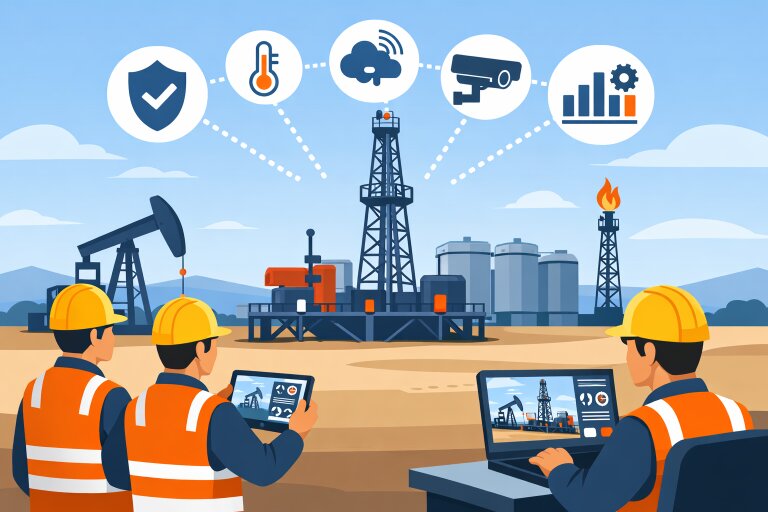
Key Takeaways
- Real-time monitoring systems provide instant alerts and enhance site safety.
- Automated and robotic solutions significantly decrease human exposure to dangerous environments.
- Digital software platforms simplify compliance and improve response to incidents.
Safety in oilfield operations has reached new heights due to recent technological advancements. Companies across the sector are adopting innovative tools and systems that enhance protection for personnel, equipment, and the environment. Today, ensuring a secure work environment goes beyond basic compliance. Operators must integrate solutions for real-time oversight, remote management, and automated safety mechanisms into their operations. Early adoption of these systems in oilfield services is not only making sites safer but also raising efficiency and productivity for everyone involved.
The oil and gas industry continues to evolve rapidly as advanced technologies provide unprecedented monitoring and control abilities. These advancements mean that risks can be identified and managed proactively before incidents occur. By leveraging new digital and automated solutions, companies are seeing a substantial reduction in on-site injuries and environmental hazards.
Technology is reshaping health and safety strategies across the sector. Innovations now extend to every corner of the operation, from rig floors to remote monitoring stations. Integrating these tools into daily operations is becoming the industry standard. This is particularly important as energy companies scale up production or manage new infrastructure such as bulk plants, which require robust safety systems and fast response mechanisms.
Traditional safety techniques are quickly becoming insufficient in today’s complex production settings. The latest tools offer fast data collection, streamlined analytics, and instantaneous decision-making resources that protect both workers and assets.
Real-Time Monitoring Systems
Real-time monitoring has revolutionized field safety by delivering immediate alerts and actionable information. Expro’s Catwalk Sensor technology is one example, with sensors issuing audible warnings as pipes approach critical locations. Workers are promptly notified when equipment is in motion, helping prevent collisions and injuries on rig sites. When every second counts, such timely alerts can be the difference between an incident and a near miss.
Real-time monitoring systems are built to integrate seamlessly with other field safety technologies, such as predictive maintenance and asset tracking software. By continuously logging detailed operational data, these systems not only identify imminent threats but can also highlight patterns that may lead to equipment failure or hazardous conditions in the future. This predictive aspect allows safety teams to intervene early, schedule repairs, or conduct targeted training sessions based on actual site trends, thus proactively reducing the likelihood of accidents. Additionally, remote dashboards and mobile interfaces empower supervisors and managers to visualize safety data from anywhere, increasing oversight without increasing headcount.
Automation in Hazardous Environments
Automated and robotic systems dramatically reduce the need for humans in hazardous locations. For instance, cleaning oil tanks on offshore production units once placed many workers at significant risk. Now, robotic tank-cleaning devices from Ambipar and SBM Offshore can remotely carry out these duties, keeping personnel out of confined, toxic spaces and protecting them from chemical residues. By delegating repetitive or dangerous tasks to machines, companies are greatly improving workplace safety.
In addition to direct task automation, robots and drones are increasingly used for routine site inspections, leak detection, and even emergency response support. These deployments prevent the need for workers to enter dangerous or unstable environments, particularly after accidents or during extreme weather conditions. Beyond just physical safety, automation reduces mental strain for human workers, as technology reliably manages repetitive or high-precision tasks. Advances in machine learning and AI-based control further enable these robotic systems to adapt to changing site conditions, making them a resilient component of oilfield safety protocols.
Digital Platforms for Safety Compliance
Digital management platforms consolidate safety metrics, compliance documentation, and incident tracking. Williams Safety & Rescue LLC’s SiteTracks SaaS platform enables seamless tracking of events, follow-up actions, and oversight of every safety requirement across the operation. These platforms make it easier for managers to detect trends, spot potential hazards, and maintain regulatory compliance by keeping all relevant safety data accessible in a single dashboard.
The interconnectivity offered by digital platforms also streamlines communication between field workers, safety managers, and executive leadership. Alerts, reports, and reminders can be sent in real time, helping organizations document training, compliance checks, and even personal protective equipment (PPE) inventories. As regulations become stricter, digital oversight platforms support the auditing process and provide transparent records that facilitate quick responses to regulatory inquiries or insurance requirements. Furthermore, integrated analytics routines within these systems enable continuous improvement by highlighting areas where safety investments yield the most impact.
Remote Wellsite Monitoring
Technology is also enabling supervisors to monitor wells and equipment remotely. Oil States Energy Services’ ACTIVEHub and ACTIVELatch systems make it possible to oversee the condition of wellsite machinery, adjust controls, and receive technical alerts without putting people in harm’s way. This shift toward remote management is both a safety and efficiency breakthrough, reducing unnecessary trips to dangerous areas and allowing for quicker intervention when issues arise.
In many operations, remote monitoring technologies are supported by satellite connectivity, cellular modems, and secure cloud platforms, ensuring continuous surveillance even in the most remote or offshore locations. These systems not only notify operators of equipment malfunctions or anomalies but can also integrate directly with automated shut-in or emergency procedures. The ability to centralize control and data analysis also means that lessons learned from one location can be rapidly shared and implemented across an entire asset portfolio, thereby standardizing best practices and elevating overall safety performance across multiple sites.
Electric Safety Valves
In well safety, electric tubing-retrievable safety valves (eTRSV) such as Halliburton’s EcoStar® provide operators with more reliable and precise control over well operations. These valves can be activated and tested from a distance, supporting quicker responses to unexpected pressure changes and helping maintain a safe well environment.
Electric valves are now being integrated with digital monitoring platforms to allow real-time tracking of valve status and immediate intervention if abnormal readings are detected. This integration helps prevent blowouts, leaks, or other dangerous incidents by ensuring that secondary containment measures are always ready to activate. The latest models are designed to require minimal maintenance and are equipped with self-diagnostic capability, which reduces downtime and ensures the system is always in operational condition. For high-risk wells or those operating in extreme conditions, these valves are a vital component in an operator’s safety arsenal, helping to reduce the likelihood of human error and improve overall well integrity.
Remote Clamp Installation Systems
Automating clamp installation during well completions reduces the time spent by workers in risky locations. The Remote Clamp Installation System (RCIS) introduced by Expro minimizes the physical handling of heavy clamps and streamlines the completion process. By minimizing manual labor on rig floors, the overall risk profile drops while productivity increases at the same time.
Remote installation tools are often designed with integrated sensors that ensure each clamp is properly tightened and positioned, thus preventing mechanical failures after the equipment is back in operation. These sensor-equipped devices can capture and transmit completion data for quality assurance and recordkeeping. As a result, safety managers gain greater confidence in the integrity of the installation, while the workforce faces fewer potential injuries from manual handling or improper installation practices. The resulting increase in operational efficiency underscores how automation not only supports safety but also optimizes costs and schedules.
Conclusion
Integrating novel safety tools into oilfield operations is reshaping industry standards for health, safety, and compliance. Real-time monitoring systems, automation, digital platforms, and remote operations all work together to create a safer, more resilient oil and gas industry. Proactive investments in advanced technology are not just a matter of regulatory compliance. They are key drivers of operational excellence and protection in modern energy production. As energy companies continue to embrace these changes, the next era of workplace safety is already here.